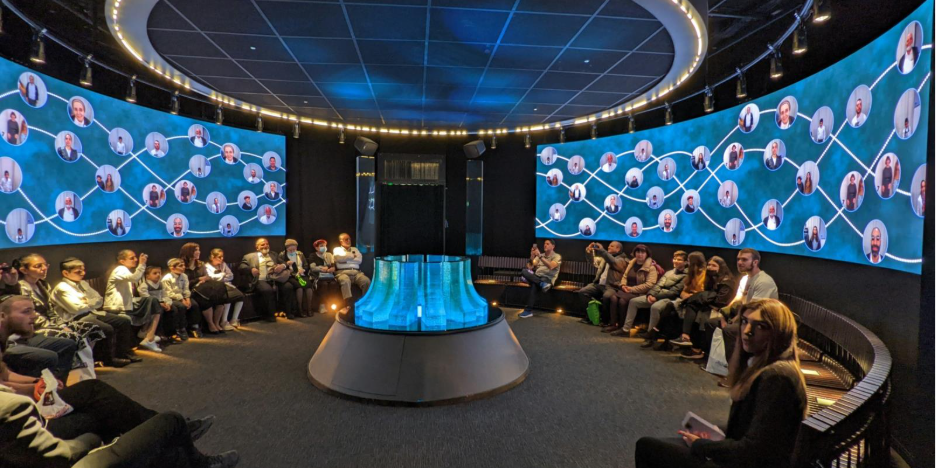
LED board installation in Miami is a construction project as much as an AV project. A lobby video wall needs solid structure, clean power and a content plan. An outdoor board on a storefront or a monument sign adds wind loads, salt air, permits and roadside rules on top of that. This guide walks through the decisions in the order we make them on real jobs, so you know what to ask before you sign a quote.
Support305 has designed and installed commercial AV across Miami-Dade, Broward and Palm Beach for more than 20 years, and our LED and video wall installation team handles everything from indoor lobby walls to event rentals. Code and statute references are linked so you can check them yourself.
What does LED board installation in Miami involve?
LED board installation in Miami covers five jobs: a site survey, structural design for the mounting, electrical and data runs, physical assembly of the LED cabinets, and calibration with the content system. Outdoor boards add permits, engineered wind design and weather sealing. Skipping any one of these steps usually shows up later as dead modules or a failed inspection.
A typical project runs like this:
Site survey. We measure the wall or structure, check viewing distances, sun exposure, power availability and where the network can reach.
Design. We pick the board size, pixel pitch and brightness, then draw the mounting structure and the power and data paths.
Permits and approvals. Outdoor work, and most work that touches structure or new circuits, goes through the building department. Landlord or HOA approval often comes first.
Installation. Structure goes up first, then cabinets, power distribution, data cabling and the processor or controller.
Calibration and handover. Every module is checked, color and brightness are matched across the board, and staff are trained on the content software.
What is the difference between indoor and outdoor LED boards?
Indoor LED boards are built for controlled light and close viewing, so they use finer pixel pitch and lower brightness. Outdoor LED boards are sealed against water and dust, run much brighter to stay readable in direct sun, and are usually viewed from farther away, which allows a coarser pixel pitch at a lower cost per square foot.
Factor
Indoor LED board
Outdoor LED board
Typical viewing distance
Close, often a few feet to across a room
Street, parking lot or highway distance
Pixel pitch
Fine, for sharp text up close
Coarser, sized to the viewing distance
Brightness
Moderate, tuned to room lighting
High, readable in Miami sun
Enclosure
Open-frame or front-service cabinets
Sealed, rated cabinets with gaskets
Permits
Usually electrical only, if new circuits are added
Building, electrical and often zoning or sign permits
The most common mistake we see is buying an indoor-grade product for a covered outdoor space such as a patio bar or a parking garage entrance. Humidity and salt air in South Florida reach those spaces, and indoor cabinets are not sealed for them.
Do you need a permit for an outdoor LED board in Miami?
Yes, in almost every case. An outdoor LED board is a sign with a structure and an electrical service, so expect a building permit for the structure, an electrical permit for the circuits, and approval under the city's sign or zoning rules. Boards facing state or federal highways can also need a separate state permit.
The local layer depends on where the property sits. The City of Miami, Miami Beach, Coral Gables, Doral and unincorporated Miami-Dade each set their own sign rules for size, placement and illumination, so the first call is to the zoning desk for that address. We cover the local permit process in more detail in our guide to AV and low voltage permits in Miami-Dade and Broward.
The state layer matters if the board is visible from a major road. Under Florida Statutes Chapter 479, a sign on the State Highway System outside an urban area, or on any part of the interstate or federal-aid primary highway system, needs a permit from the Florida Department of Transportation, and a permit is required for each sign facing. The same chapter prohibits signs lit in a way that causes glare or impairs the vision of motorists, and it defines an "automatic changeable facing" as one that delivers two or more messages through an automated or remote process, which describes most digital boards.
How are outdoor LED boards built for hurricanes?
Outdoor LED boards in Miami are built to the Florida Building Code's High-Velocity Hurricane Zone rules, which apply to Miami-Dade and Broward counties. That means engineered wind design for the cabinets, the mounting frame and the foundation or wall anchors, plus sealed enclosures and fasteners that hold up to salt air.
The Florida Building Commission defines the High-Velocity Hurricane Zone (HVHZ) specifically as Miami-Dade and Broward counties, and the code uses a single design wind speed per risk category in those counties. In practice that means:
Engineered drawings. A Florida-licensed engineer sizes the structure, connections and anchors for the board's actual surface area, because a large flat LED face catches wind like a sail.
Product approvals. Miami-Dade runs its own product control and approval process, which issues a Notice of Acceptance (NOA) for products approved for use in the HVHZ. Ask your installer which components on your job, if any, need one.
Corrosion control. Near Biscayne Bay or the beach, we specify stainless or coated hardware and sealed cable entries so corrosion does not loosen connections over time.
A storm plan. Know who powers the board down before a storm, who inspects it after, and whether the warranty covers wind damage.
What IP rating and brightness does an outdoor LED board need?
An outdoor LED board in Miami should have a front-face IP rating that is dust tight and resists water jets (IP65 or better), and enough brightness to stay readable in direct afternoon sun. It also needs automatic dimming so it does not glare at night, which matters for drivers and neighbors.
IP codes come from IEC 60529. The first digit rates protection against solids and dust, where 5 means dust protected and 6 means dust tight. The second digit rates protection against water, where 5 means protection against water jets and 6 means protection against powerful water jets. For a board that faces Miami rain sideways during summer storms, we want a 6 on the first digit and at least a 5 on the second, on the front and the rear of the cabinet.
Brightness should match the setting rather than a spec sheet maximum. A board in full sun needs far more output than one under a canopy, and every outdoor board we install gets a light sensor or a schedule that drops brightness after sunset.
How do you choose the right pixel pitch?
Choose pixel pitch by the closest distance a viewer will normally stand from the board. The smaller the pitch, the sharper the image up close and the higher the price. A lobby wall people walk past needs a fine pitch, while a roadside board read from a car can use a much coarser one.
Pixel pitch is the distance between the centers of two neighboring LEDs, measured in millimeters. A few practical rules from our projects:
Start with the content. Small text, menus and spreadsheets need a finer pitch than video and large graphics.
Measure the real viewing distance. Stand where your customers will stand. In a narrow retail space that distance is often shorter than people assume.
Do not overbuy for distance. A fine-pitch board viewed from across a parking lot costs more without looking better.
How much does LED board installation cost in Miami?
LED board installation cost in Miami depends mostly on the board's size and pixel pitch, whether it is indoor or outdoor, and how much structural and electrical work the site needs. For outdoor boards, engineering, permits and hurricane-rated mounting can add a meaningful share on top of the hardware itself.
The line items that move a quote the most:
Display hardware. Size and pixel pitch drive this more than any other factor.
Structure. A wall mount on solid block is simple. A new pole, monument or rooftop frame needs engineering and a foundation.
Electrical and data. New dedicated circuits, conduit runs and a network connection to the controller. All electrical work is installed to the National Electrical Code (NFPA 70) and inspected under the permit.
Permits and drawings. Engineering, permit fees and the time it takes to get approvals.
Content and control. The media player or processor, the content software, and whether you want remote scheduling.
Service. A maintenance plan with spare modules keeps a board looking even after years in the sun.
A fair quote breaks these out. If an installer gives you a single number for an outdoor board with no engineering or permit line, ask why.
Frequently Asked Questions
The physical install of an indoor board often takes days once the wall is ready. Outdoor boards take longer because engineering, permits and inspections come first, and those steps usually set the schedule more than the installation crew does. Ask for a timeline that lists permit review separately from install days so you can plan around it.
Sometimes. An existing pole or cabinet was engineered for the old sign's weight and wind area, and an LED face is often heavier with different wind loads. An engineer needs to check the structure against current High-Velocity Hurricane Zone requirements before a new board goes on it, and the change still needs a permit.
Most do. A networked controller lets you update content, change schedules and get alerts remotely instead of plugging in on site. We run the data link over structured cabling or fiber back to your network, and keep the display on its own segment so it does not expose the rest of your systems.
Plan for periodic inspection of fasteners, seals and cable entries, especially after storms, plus cleaning of the face and ventilation paths. Failed modules are swapped from spares out of the same production batch so colors match. A maintenance agreement with response times is worth having for any board that drives revenue.
Yes, for events and short-term needs. Support305 designs, installs and rents visual solutions, so a rental LED wall can cover a launch, a conference or a seasonal promotion. Rental makes sense when the use is temporary; a permanent board pays off when it runs most days of the year.
Start with an installer who can survey the site and tell you which permits apply, then involve the engineer and the city early. Getting landlord approval and zoning feedback before you order hardware avoids buying a board that the site cannot legally hold. You can book a free site consultation with Support305 to start.
Next steps for your LED board project
If you are planning LED board installation for a lobby, storefront, venue or outdoor sign anywhere in Miami-Dade, Broward or Palm Beach, start with a site visit. We will measure the space, check power and structure, flag the permits your address needs, and give you a quote with every line item broken out. Contact Support305 to schedule it, or see our video wall and LED services for recent work.
About the author
Ryan Hadley is a Low Voltage Project Designer and Programmer at Support305. He designs and programs the low voltage and AV systems behind Support305 installations, from LED boards and video walls to conference rooms, for businesses across Miami-Dade, Broward and Palm Beach.