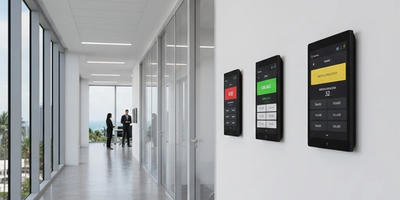
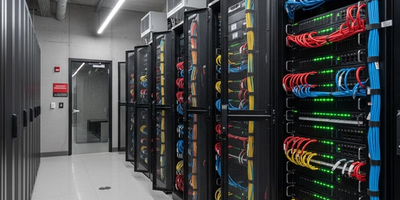
Conference room AV installation in Miami typically runs $3,500 to $8,000 for a small huddle room, $9,000 to $18,000 for a standard six to twelve person conference room with video conferencing, and $20,000 to $45,000 for a large conference room. Executive boardrooms with multiple displays, motorized shades, integrated lighting and a control system commonly exceed $50,000 and can pass $150,000. Roughly 55 to 70 percent of a typical quote is hardware. The rest is design, cabling, programming, commissioning and labor, and in South Florida that labor line carries local costs that do not appear in a national price guide: building COIs, freight elevator windows, after-hours access in Brickell and Downtown towers, and Miami-Dade or Broward permitting.
Key Takeaways
Room size drives the number, but the room's job drives it more. A twelve-person room used for internal standups and a twelve-person room used for investor presentations are not the same build, and can differ by 3x.
Hardware is the minority of a well-scoped project. Expect 30 to 45 percent of the total in design, low-voltage cabling, mounting, DSP programming, control system programming, commissioning and documentation. Quotes that are 90 percent hardware are equipment lists, not installations.
Miami adds real cost that is not padding. Certificate of insurance requirements from building management, restricted freight elevator windows, after-hours-only work in occupied towers, plenum-rated cable in older buildings, and county permitting all land in the labor line.
Recurring cost is the line people forget. Platform licensing runs roughly $480 to $600 per room per year, and a support agreement is typically 8 to 15 percent of installed hardware value annually.
The cheapest quote usually has the scope holes. Missing items are almost always the same ones: no commissioning, no as-built documentation, no permit, no acoustic treatment, and no allowance for the electrical work the AV contractor does not perform.
Get the scope in writing before comparing prices. Two quotes for "a conference room AV system" are not comparable unless both list the same displays, microphone coverage, control interface and deliverables.
What You Are Actually Paying For
The most common budgeting mistake is treating a conference room AV project as a hardware purchase. It is a construction and integration project that includes hardware.
A realistic quote has five cost centers:
Hardware. Displays or LED wall, camera, microphones, speakers, digital signal processor, switching and distribution, control processor and touch panel, mounts and racks. This is the only line most buyers scrutinize.
Design and engineering. Room acoustics assessment, display sizing against viewing distance, microphone coverage mapping, signal flow drawings, rack elevations, and a bill of materials. On a boardroom this is a genuine engineering deliverable, not a sales activity.
Low-voltage infrastructure. Cable pathways, conduit or J-hooks, plenum-rated cable where required, floor boxes or table grommets, terminations, testing and certification. Retrofitting structured cabling into a finished space costs multiples of running it during construction.
Programming and commissioning. DSP tuning for the actual room, control system programming, platform configuration, and a documented commissioning pass that proves every source, every microphone and every preset works. This is the single most commonly omitted line in a cheap quote, and the single largest driver of whether people actually use the room.
Documentation and handover. As-built drawings, rack photos, configuration backups, credentials, a one-page user guide, and training. Six months later, when something breaks, this is what determines whether the fix takes an hour or a day.
Cost by Room Type: 2026 Ranges
Ranges below reflect installed cost including hardware, cabling, labor, programming and commissioning. They exclude furniture, millwork, electrical service, structural reinforcement, and acoustic construction.
Room type
Typical capacity
Installed cost range
What that buys
Huddle room
2 to 6
$3,500 to $8,000
Single 55 to 65 inch display, all-in-one video bar, wall mount, one HDMI or USB-C connection, basic wireless sharing
Standard conference room
6 to 12
$9,000 to $18,000
75 to 86 inch display, separate PTZ or intelligent camera, ceiling or table microphones, DSP, ceiling speakers, wireless presentation, simple control
Large conference room
12 to 20
$20,000 to $45,000
Dual displays or 98 inch plus, beamforming mic array, multi-zone audio, HDBaseT or AV-over-IP distribution, touch panel control, scheduling display
Executive boardroom
14 to 30
$50,000 to $150,000+
LED wall or multi-display, camera switching, ceiling mic arrays with per-seat coverage, full control system, motorized shades, lighting integration, redundant paths
Training or multipurpose room
25 to 100+
$35,000 to $120,000+
Divisible room logic, distributed audio with speech reinforcement, wireless mics, lecture capture, multiple display zones
Auditorium conference room
100 to 400+
$85,000 to $350,000+
LED video wall or large-venue laser projection, stage and podium sources, line-array or distributed speech reinforcement, wireless handheld and lavalier mics, assistive listening system, camera package for capture and streaming, DSP with multiple zones, full control system, and a dedicated operator position
Installed cost includes hardware, cabling, labor, programming and commissioning.
For an external reference point, another South Florida integrator publishes that a well-equipped mid-size conference room with video conferencing usually starts around $15,000, and that executive boardrooms with comprehensive automation including multiple displays, motorized shades, integrated lighting and premium audio can run above $75,000. The ranges above are broadly consistent with that.
Auditorium conference rooms
An auditorium conference room is a different category from a large conference room, not just a bigger one. Once a room seats more than roughly 100 people and the audience faces a stage or podium rather than a table, the design shifts from conversation capture to speech reinforcement and sightlines. That means a video wall or a large-venue projector sized for the back row, distributed or line-array loudspeakers tuned for intelligibility, wireless microphone coordination across multiple channels, an assistive listening system to meet ADA requirements, and usually a camera and streaming package so the session reaches people who are not in the room.
Two cost drivers dominate here. The first is acoustics and structure: rigging points, ceiling height, room treatment and the electrical service to support it are often construction line items rather than AV ones. The second is operation. An auditorium that only works when a trained operator runs it will sit unused, so budget for either a simplified preset-driven control layer or the staffing to run it. In Miami, auditorium work in hotels, universities, hospitals and civic buildings also tends to carry union or house-crew coordination, prevailing-wage schedules on public projects, and longer permit review than a standard office fit-out.
Why the same room size spans a 3x range
Three variables move the number more than square footage:
Whether the room is native or bring-your-own-meeting. A dedicated Microsoft Teams Rooms or Zoom Rooms appliance with one-touch join costs more than a USB video bar someone plugs a laptop into, and is a different support model.
Microphone strategy. Table microphones are cheaper. Ceiling beamforming arrays cost significantly more, require more programming time, and are the reason remote participants can actually hear a room. On a boardroom, this is not an area to value-engineer.
Control. A single wall plate with an HDMI input is inexpensive. A programmed touch panel that starts the meeting, sets the lights, closes the shades and selects the camera is a labor line as much as a hardware line.
If you are still deciding what tier the room belongs in, our guide on how to choose the right AV conference room setup works through the same decision from the room's use case rather than its budget.
The Miami and South Florida Cost Drivers
These are the items that make a Miami quote higher than the same room in a suburban office park, and they are legitimate.
Building access and COI requirements. Class A towers in Brickell, Downtown, Coral Gables and Aventura typically require a certificate of insurance naming the building as additional insured, pre-registration of every technician, and sometimes a building engineer escort. Each of those consumes schedule.
Law firms and medical practices in Coral Gables. Two of the most common conference room builds on the Gables corridor are law firm boardrooms and doctors' clinic meeting rooms, and both carry requirements a general office does not. A law firm room used for depositions, client meetings and remote hearings needs speech privacy at the glass line, dependable recording and playback, and microphone coverage that holds up when several people speak at once. A doctors' clinic conference room used for case review, referral meetings or telehealth consults has to handle patient information under HIPAA, which usually means access-controlled sharing, recording disabled or tightly governed by default, and a documented configuration you can hand to a compliance reviewer. Coral Gables also runs its own building department and design review rather than defaulting to the county process, and many of its buildings sit inside the Mediterranean architectural overlay, so confirm permitting and any facade or signage constraints early. Expect both room types to land in the large conference room or executive boardroom tier rather than the standard tier.
Freight elevator windows. In an occupied high-rise, material and rack delivery happens in a scheduled window, sometimes a two-hour block, sometimes only after 6pm. A rack that takes 40 minutes to move takes half a day when it has to wait for an elevator slot.
After-hours and weekend labor. Occupied floors often cannot tolerate daytime drilling and ceiling work. Premium labor rates on an evening and weekend schedule can add 20 to 35 percent to the labor line on a retrofit.
Labor rates. AV labor in South Florida generally bills between $90 and $250 per hour. The low end reflects an install technician or cable puller on a straightforward daytime job. The middle of the range covers a lead installer, rack build and field engineering. The top of the range covers control system and DSP programming, commissioning, and after-hours or weekend work in an occupied tower. Almost every project blends several of those rates, which is why comparing bidders on a single hourly figure tells you very little. Ask instead for the estimated hours by role, and check that programming and commissioning hours are actually counted rather than folded into the word "included."
Permitting and inspection. Commercial low-voltage work in Miami-Dade generally requires a permit, including in multi-family and condominium buildings, and including in existing buildings where no other renovation is happening. Permit fees themselves are modest. The schedule impact of plan review and inspection is not.
Plenum-rated cable and firestopping in older stock. A 1980s building with a shared return-air plenum requires plenum-rated cable and proper firestopping at every penetration. A newer building with dedicated ductwork does not. Same room, different cable spec, different cost.
Hurricane and coastal considerations. Structural mounting standards for heavy displays, surge protection at the rack, and corrosion-resistant hardware on anything near a terrace, balcony or open-air space. Salt air is a material factor in Miami Beach, Key Biscayne and waterfront properties in a way it is not inland.
Condo and HOA approval cycles. If the room sits inside a condominium or association-governed building, board approval and architectural review can add weeks. That is not a cost line, but it is a schedule risk that turns into a cost line when a deadline forces overtime.
Recurring Costs Most Budgets Miss
A conference room is an operating expense, not just a capital one.
Platform licensing: $480 to $600 per room, per year. Microsoft Teams Rooms Pro is around $40 per room per month; Zoom Rooms is around $49 per room per month or $499 annually.
Support and maintenance agreement: 8 to 15 percent of installed hardware value, per year. Covers remote monitoring, firmware, response SLA, and typically some on-site hours.
Extended warranties: 2 to 5 percent of hardware value. Manufacturer-dependent, worth it on displays and cameras.
Refresh reserve: 15 to 25 percent of hardware value. Cameras and codecs run on a 4 to 6 year cycle, displays 5 to 8 years, cabling 15 years plus.
Licensing figures above are US list prices as published in 2026 and change periodically. Confirm current rates with Microsoft and Zoom before locking a budget.
Where Quotes Differ (and What Is Usually Missing)
When two quotes for the same room are 40 percent apart, the gap is almost never negotiating skill. It is scope. The items that go missing, in rough order of frequency:
Commissioning. No documented pass proving every input, every microphone and every preset works before handover.
As-built documentation and configuration backups. When the low bidder leaves, nobody knows how the system is wired or how to restore it.
Permit and inspection. Excluded from the quote, then billed as a change order, or worse, skipped entirely.
Acoustic treatment. Glass-walled conference rooms in Miami towers look excellent and sound terrible. No microphone fixes an untreated room.
Electrical coordination. AV contractors do not pull line-voltage circuits. Someone has to, and if nobody scoped it, the project stops.
Programming hours. Listed as "included" with no hour count, which means the first change request becomes a change order.
Training and handover. A room nobody was taught to use is a room that gets a laptop and a USB speakerphone within a month.
Ask every bidder to price the same written scope. If one comes back materially cheaper on identical scope, that is a real finding. If the scopes differ, you are comparing nothing.
How to Build a Realistic Budget
Define the room's job before its size. Internal collaboration, client-facing presentation, board governance, depositions and client meetings in a law firm, clinical case review or telehealth in a medical practice, training, or an auditorium-style all-hands. This decides the tier.
Count your rooms and standardize. Standardizing on three or four room types with a fixed bill of materials per type saves more money over five years than negotiating any single quote, and cuts support cost because your team learns one interface.
Budget the tier, then add 15 percent for site conditions. In an occupied high-rise retrofit, make it 20 to 25 percent.
Add recurring cost to the five-year number. A $15,000 room is closer to $23,000 over five years once licensing and support are counted. Present it that way to finance or the number gets revisited later.
Get the integrator in before drywall closes. If the space is under construction or being fit out, coordinating audio visual installation during rough-in is the single largest cost avoidance available. Retrofitting cable into a finished ceiling can cost several times what it would have cost during the build.
Conference Room AV Budget Checklist
Defined the primary use case for each room, not just its capacity.
Counted total rooms and grouped them into three or four standard types.
Confirmed the meeting platform (Microsoft Teams, Zoom, Google Meet, or mixed) before selecting hardware.
Written a single scope of work that every bidder prices against.
Verified commissioning, as-built documentation and configuration backups are explicitly included.
Verified permit responsibility is assigned in writing.
Confirmed who is pulling line-voltage electrical, and that it is scoped.
Asked about acoustic treatment for any glass-walled room.
Confirmed building COI, freight elevator and after-hours access requirements with property management.
Added five-year licensing and support cost to the capital number.
Confirmed the integrator holds the correct Florida license for the work, and any required county competency card.
Frequently Asked Questions
A rough planning figure is $1,200 to $2,200 per seat for a standard conference room and $2,500 to $5,000 per seat for an executive boardroom. Per-seat math is useful for a first-pass budget only. Cost scales with room geometry, microphone coverage and control complexity rather than headcount, so a six-person boardroom can cost more than a twelve-person meeting room.
Usually not, once total cost is counted. Integrators buy at dealer pricing, carry manufacturer warranties and support paths that direct buyers do not get, and take responsibility for the system working as a system. Owner-furnished equipment also shifts compatibility risk onto you, and most integrators will not warrant a system built from hardware they did not specify. Where it can make sense is a single huddle room with an all-in-one video bar and no integration.
Typically 30 to 45 percent of a properly scoped conference room project is design, cabling, labor, programming, commissioning and documentation. On a retrofit in an occupied building with after-hours access restrictions, labor can approach half the total. A quote where labor is 10 percent of the number is missing scope. In South Florida, hourly labor typically falls between $90 and $250 depending on the role, from install technician at the low end to control system programming, commissioning and after-hours work at the high end.
For commercial work in Miami-Dade, generally yes. The county's low-voltage permit exemptions apply to single-family residences, duplexes and townhouses, and explicitly exclude condominiums. Permits are still required for commercial work including multi-family buildings, and for commercial installations in existing buildings even where no renovation or alteration is being performed. Requirements vary by municipality within the county, so confirm with the specific building department. Ask your integrator to confirm in writing who is pulling the permit.
Plan on platform licensing of roughly $480 to $600 per room per year, a support agreement at 8 to 15 percent of installed hardware value annually, and a refresh reserve for cameras and codecs on a four to six year cycle. Skipping the support agreement is a common false economy, because a boardroom that fails during a client meeting costs more in one incident than a year of coverage.
Building access requirements, restricted freight elevator windows, after-hours labor in occupied towers, county permitting, plenum-rated cable in older buildings, and coastal corrosion and surge considerations all land in the labor and materials lines. These are site conditions, not markup. A quote that ignores them will produce change orders later.
Yes, and infrastructure-first is the right sequence. Run cable, conduit, pathways and floor boxes in year one while walls and ceilings are open, then add displays, cameras and control in year two. Reversing that order means opening finished ceilings twice and paying for the same access work more than once.
The Bottom Line
A conference room in Miami costs what it costs because of three things: what the room has to do, what the building will allow, and how much of the work is real integration versus a hardware drop. Room size sets the tier. Site conditions and scope discipline decide whether you land at the bottom of the range or the top of it.
If you are comparing quotes right now and they are far apart, the useful next step is not negotiating the high one down. It is putting both bidders against one written scope and finding out what the cheap one left out.
Planning a conference room build or comparing AV quotes in Miami, Broward or Palm Beach? Support305 will review your scope and give you a straight range before you commit. Call (305) 222-7711 or request a scope review.
Explore More Blogs
Discover more insights and tips from our latest articles